Blog

Like the Doubting Disciples

Mark 8:4

And his disciples answered him, “How can one feed these people with bread here in this desolate place?”

Mark 8:16-21

16 And they began discussing with one another the fact that they had no bread. 17 And Jesus, aware of this, said to them, “Why are you discussing the fact that you have no bread? Do you not yet perceive or understand? Are your hearts hardened? 18 Having eyes do you not see, and having ears do you not hear? And do you not remember? 19 When I broke the five loaves for the five thousand, how many baskets full of broken pieces did you take up?” They said to him, “Twelve.” 20 “And the seven for the four thousand, how many baskets full of broken pieces did you take up?” And they said to him, “Seven.” 21 And he said to them, “Do you not yet understand?”

Do you ever wonder about the feeding of the 4,000? Not long after the feeding of the 5,000, Jesus again feeds a crowd of people. This time he does so with 7 loaves, not 5. But right before it happens, the disciples ask Jesus how in the world they can find food for the people in such a desolate place. Later in the chapter, when the disciples again worry about their provision, Jesus reminds them of feeding both crowds.

Imagine, even though the disciples are with Jesus, even though they have seen him miraculously provide food, even though they know better, the disciples still worry about simple provision.

How like them are we? God created this world. He will keep his own. Yet we worry. We worry about whether we will have what we need. We worry about whether we will have the health we want. We worry about things in the government we cannot control. We worry about the future in a thousand ways. And we forget that God knows us, knows our needs, and will take care of us in a way that is best until the day that he takes us home. He will keep us, even through suffering, and carry us in Christ to glory.

And how like the doubting disciples are we? Jesus is God in the flesh. He has provided for our forgiveness. How often do we doubt it when we fear or are ashamed? Rest in Christ. Trust in his finished work. Remember and keep the gospel in the front of your mind.

Yes, we are like the doubting disciples. But how kind is it that God would record for us that the disciples did doubt? This should not make us embrace our doubts, but it should help us to remember that God has handled this issue with his followers before. We are in good company as we struggle and press on toward the Lord who loves us, keeps us, and provides for us.

Knowledge is not the Ultimate Need

Mark 6:20

for Herod feared John, knowing that he was a righteous and holy man, and he kept him safe. When he heard him, he was greatly perplexed, and yet he heard him gladly.

Herod knew. Herod knew that John was righteous and holy. Herod knew that a righteous and holy preacher of the ways of God clearly condemned Herod’s immoral relationship. Herod knew enough to protect John from harm until he was backed into a corner. Yet Herod did not change his behavior.

Sometimes we think that knowledge, data, is the need of the world. If only we can convince people of the truth, the rightness of the right and the wrongness of the wrong, people will change. Herod gives the lie to that thought. Herod had a hard and impenitent heart. Herod heard true words from a man he knew was telling the truth, but Herod did not change.

So, do we stop telling the truth? No, of course not. But we should not think that information is the issue. People’s hearts change when God changes them. For people to have life, they need more than an argument. They need the enlivening power of God’s Holy Spirit. Thus, for us, the right answer is to prayerfully tell the truth as we ask the Lord to work a miracle in the hearts of those who need new life.

My 2025 Bible Reading Plan

One thing that I find helpful for my own discipline is to plan out my Bible reading for the upcoming year. Like many, I have worked through a variety of different kinds of plans.

For 2025-2026, I am planning to work through a plan that will take me through the New Testament twice (once per year) and the Old Testament once (half each year). This will allow me to complete the plan by reading 2 chapters of Scripture daily, or to take weekends off by reading 3 chapters most weekdays.

If you are interested in the plan, here it is in a downloadable format. This file shows each week’s reading for the next year.

To read daily, during weekdays, read a single chapter from the New Testament and one from the first Old Testament section. Then, on the weekend, read 2 chapters per day from the second Old Testament selection.

To have weekends off, Read a chapter from each section Monday through Thursday and a chapter from the New Testament and first Old Testament section on Friday.

If this is at all confusing, let me show you what my first two weeks would look like using each strategy.

Daily Plan:

1/6/25: Mark 1; Gen 1

1/7/25: Mark 2; Gen 2

1/8/25: Mark 3; Gen 3

1/9/25: Mark 4; Gen 4

1/10/25: Mark 5; Gen 5

1/11/25: Isa 1; Isa 2

1/12/25: Isa 3; Isa 4

1/13/25: Mark 6; Gen 6

1/14/25: Mark 7; Gen 7

1/15/25: Mark 8; Gen 8

1/16/25: Mark 9; Gen 9

1/17/25: Mark 10; Gen 10

1/18/25: Isa 5; Isa 6

1/19/25: Isa 7; Isa 8

Or, keeping weekends free, the readings look like this:

1/6/25: Mark 1; Gen 1; Isa 1

1/7/25: Mark 2; Gen 2; Isa 2

1/8/25: Mark 3; Gen 3; Isa 3

1/9/25: Mark 4; Gen 4; Isa 4

1/10/25: Mark 5; Gen 5

1/11/25:

1/12/25:

1/13/25: Mark 6; Gen 6; Isa 5

1/14/25: Mark 7; Gen 7; Isa 6

1/15/25: Mark 8; Gen 8; Isa 7

1/16/25: Mark 9; Gen 9; Isa 8

1/17/25: Mark 10; Gen 10

1/18/25:

1/19/25:

Christ Has Overcome the World

John 16:33 – I have said these things to you, that in me you may have peace. In the world you will have tribulation. But take heart; I have overcome the world.”

This morning, we are 1 day from election day in the United States. Some folks are hopeful. Some are stressed. Things may go the way you want. Things may go the way others want. But keep this in mind: Christ has overcome the world.

The world refused to recognize Jesus. Jesus still told us that he is God in the flesh, God the Son, our only Savior.

The world ridiculed Jesus. Jesus loved the lost world and showed them that he is the way, the truth, and the life.

The world called Jesus a threat and put him to death. Jesus told us that he willingly laid down his life to pay for our sins. Then Jesus rose from the grave, conquered death, and showed that all who let go of the mastery of their lives and put their trust in him will live forever with him under God’s grace.

The world thought Jesus was defeated, that he disappeared, that his disciples hid his body. But the risen Jesus is enthroned in heaven, reigning as King of kings and Lord of lords, and will return to rule forever.

Jesus warned his church that in this world, we will have tribulation. That is true. The more we love Jesus, the Jesus they hated, the more we will find the world opposed to us too. But the more we love Jesus and trust in him, the more courage we will take as we remember that he has in fact overcome the world. The battle is won. Our Savior reigns. Let us never lose heart. Let us always rest in and hope in our Savior.

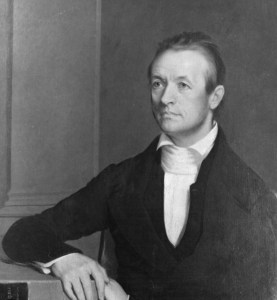
Adoniram Judson and the Glorious Story of the Gospel

In the year 1812, Adoniram Judson left the united States for the nation of Burma, the first American international missionary. Judson worked, sacrificed, suffered, and honored the Lord in that difficult land until his death in 1850, nearly thirty-eight years later. The work in Burma was incredibly difficult, and Judson only baptized his first convert after seven hard years of toil. Judson would suffer sickness and imprisonment and would grieve the deaths of two wives and seven of his thirteen children. Eventually, Judson would successfully translate the Bible into Burmese, develop the first English-Burmese dictionary, see many people come to Christ, and help many missionaries take up the cause.

In 1845, after 33 years overseas, Judson returned to the United States for the first time, grieving the death of his second wife who died on the journey. Arriving in Massachusetts, Adoniram expected that no one would think anything of him or his work. But the missionary was surprised. Among churches in New England, especially Baptist churches, the name of Adoniram Judson had become legendary. And during his time in the states, Judson was overwhelmed with what he believed to be too much attention.

During his visit, Adoniram regularly refused to tell missionary stories that would fascinate people about him or his work, sometimes refusing to speak to groups at all and sometimes speaking only simple, gospel messages. After one such presentation, a lady named Emily, who would soon become Judson’s third wife and join him on the mission field, asked Adoniram about why he did not give the people more of a story. Here is how a biographer of Judson explained the exchange:

As he sat down [Emily recollected]… it was evident, even to the most unobservant eye, that most of the listeners were disappointed. After the exercises were over, several persons inquired of me, frankly, why Dr. Judson had not talked of something else; why he had not told a story … On the way home, I mentioned the subject to him.

“Why, what did they want?” he inquired; “I presented the most interesting subject in the world, to the best of my ability.”

“But they wanted something different—a story.”

“Well, I am sure I gave them a story—the most thrilling one that can be conceived of.”

“But they had heard it before. They wanted something new of a man who had just come from the antipodes.”

“Then I am glad they have it to say, that a man coming from the antipodes had nothing better to tell than the wondrous story of Jesus’ dying love.”1

There is something beautiful in Judson’s response to Emily. People admired the legendary missionary. But for his part, Judson wanted people to glory in Jesus.

1 Courtney Anderson, To the Golden Shore: The Life of Adoniram Judson (Valley Forge, PA: Judson Press, 1987), Kindle Edition, 431.

Nicodemus Knew

John 3:1–3 – 1 Now there was a man of the Pharisees named Nicodemus, a ruler of the Jews. 2 This man came to Jesus by night and said to him, “Rabbi, we know that you are a teacher come from God, for no one can do these signs that you do unless God is with him.” 3 Jesus answered him, “Truly, truly, I say to you, unless one is born again he cannot see the kingdom of God.”

Nicodemus knew. Of course Nicodemus knew. Nicodemus, after all, was thought of as the teacher of Israel. He was brilliant. He studied. He saw and evaluated the evidence. Nicodemus knew.

That Nicodemus understood that Jesus had a connection to God was obvious. Jesus was doing things that ordinary men do not do. Jesus had healed people and turned water to wine by the time Nicodemus met the Savior. As a man who understood the basics of the Scripture, the prominent Pharisee had no trouble putting two and two together to get four.

How interesting, then, that Jesus, in verse 3, shows us that Nicodemus was not there yet. No matter how intellectual Nicodemus was, no matter how brilliant, something else had to come to bear in order for Nicodemus to go from knowing a few facts to being a child of God. Nicodemus needed to be born again. He needed a supernatural move of the Spirit of God to save his soul.

Sometimes we act as though the force of basic human intellect is what we need to see people saved. And I’m surely not opposed to people learning and strengthening their evangelistic and apologetic arguments. But the truth is, salvation is a work of God on the human soul. Salvation is bringing a helpless baby to birth. Salvation involves more than a grasp of and belief in mere facts. Salvation is a soul-changing trust in the person and work of the Savior that changes us from enemies of God to those who desire to please him.

Are you considering Jesus? Learn the facts. But ultimately, let go and trust. Believe with your brain, but believe beyond your brain; believe in your very soul. Put your whole trust for your whole eternity in the Savior who lived, died, and rose again to justify people who could never earn the favor of God on our own. Nicodemus knew the facts. But only the hand of God and the mysterious movement of the Spirit and a faith beyond mere intellect could save his soul.

Trusting in Your Own Reason or in the Word of God

In 1819, Adoniram Judson was taking the gospel to Birma. In a conversation with a local, Judson saw that a man almost believed but struggled with accepting the truth of Scripture over his own reason. The following exchange is both an encouraging story and a reminder that we who share the gospel must not compromise the message for the sake of a quick profession of faith:

They were well into their preparations when old Maung Shway- gnong paid the mission another visit. He no longer would go near the zayat, but he did not seem to be able to stay away from Adoniram. This time he spent hours raising hair-splitting objections, all of which Adoniram answered fully. Suddenly Maung Shway-gnong admitted that he did not believe a word of what he had been saying. He had merely been trying to test Adoniram and his religion.

"Do you think I would pay you the least attention if I found you could not answer all my questions and solve all my difficulties?" he said. He really did believe in God, in His son Jesus, and in the atonement. In short, he was a Christian at heart.

Adoniram was skeptical. "Do you believe all that is contained in the book of St. Matthew that I have given you? In particular, do you believe that the Son of God died on a cross?"

"Ah, you have caught me now," the old teacher admitted with some chagrin. "I believe that He suffered death. But I cannot admit He suffered the shameful death of the cross."

Adoniram, knowing Maung Shway-gnong, had expected the answer. It was difficult for a Burman, particularly a high-born scholar, to imagine a God who would permit His Son to undergo any kind of indignity. The whole idea was abhorrent. Adoniram pressed home its meaning: "Therefore you are not a disciple of Christ. A true disciple inquires not whether a fact is agreeable to his own reason, but whether it is in the book. His pride has yielded to the Divine testimony. Teacher, your pride is still unbroken. Break down your pride, and yield to the word of God."

Maung Shway-gnong stopped to think. Then he said: "As you utter those words I see my error. I have been trusting in my own reason, not in the word of God." Someone entered and he fell silent. When the intruder left after a little while, he said thoughtfully, "This day is different from all the days on which I have visited you. I see my error in trusting in my own reason; and I now believe the crucifixion of Christ, because it is contained in the Scripture." They talked for a while at random and the conversation led to the uncertainty of life. Maung Shway-gnong had a new thought. "I think I shall not be lost even though I should die suddenly."

"Why?"

"Because I love Jesus Christ."

"Do you really love Him?"

"No one that really knows Him can help loving Him," said the old man with feeling; and so departed.

Anderson, Courtney. To the Golden Shore: The Life of Adoniram Judson (pp. 223-224). Judson Pr. Kindle Edition.

The Regulative Principle Frees us from Bondage and Legalism

Doing a little study on the Regulative Principle of worship for an upcoming class, I came across this quite helpful application in an article by Derek Thomas:

What is sometimes forgotten in these discussions is the important role of conscience. Without the regulative principle, we are at the mercy of “worship leaders” and bullying pastors who charge noncompliant worshipers with displeasing God unless they participate according to a certain pattern and manner. To the victims of such bullies, the sweetest sentences ever penned by men are:

God alone is Lord of the conscience, and hath left it free from the doctrines and commandments of men, which are, in anything, contrary to His Word, or beside it, in matters of faith or worship. So that to believe such doctrines, or to obey such commands out of conscience, is to betray true liberty of conscience: and the requiring of an implicit faith, and an absolute and blind obedience, is to destroy liberty of conscience, and reason also. (WCF 20:2)

To obey when it is a matter of God’s express prescription is true liberty; anything else is bondage and legalism.

Thomas, Derek. “The Regulative Principle of Worship.” Ligonier, November 12, 2021. Accessed 22 Jul 2024, https://www.ligonier.org/learn/articles/regulative-principle-worship.

Biblically Discovering God’s Top Priority

In a recent Sunday School Growth Class, we looked at multiple Scriptures to see that the glory of God is the highest priority for all things. Here is that list along with a set of extra verses and questions we could not address due to time. Note that this list is an adaptation from the Appendix in Piper’s Desiring God along with other studies.

Why did God create people?

Isaiah 43:6-7 ()

6 I will say to the north, Give up,
and to the south, Do not withhold;
bring my sons from afar
and my daughters from the end of the earth,
7 everyone who is called by my name,
whom I created for my glory,
whom I formed and made.

Why did God choose a people for himself and make Israel his possession?

Jeremiah 13:11

For as the loincloth clings to the waist of a man, so I made the whole house of Israel and the whole house of Judah cling to me, declares the Lord, that they might be for me a people, a name, a praise, and a glory, but they would not listen.

Why did God rescue Israel from bondage in Egypt?

Psalm 106:7-8

7 Our fathers, when they were in Egypt,
did not consider your wondrous works;
they did not remember the abundance of your steadfast love,
but rebelled by the sea, at the Red Sea.
8 Yet he saved them for his name’s sake,
that he might make known his mighty power.

Why did God part the Red Sea, rescue Israel, and destroy Pharaoh’s army?

Exodus 14:15-18

15 The Lord said to Moses, “Why do you cry to me? Tell the people of Israel to go forward. 16 Lift up your staff, and stretch out your hand over the sea and divide it, that the people of Israel may go through the sea on dry ground. 17 And I will harden the hearts of the Egyptians so that they shall go in after them, and I will get glory over Pharaoh and all his host, his chariots, and his horsemen. 18 And the Egyptians shall know that I am the Lord, when I have gotten glory over Pharaoh, his chariots, and his horsemen.”

Why did God spare Israel again and again in the wilderness?

Ezekiel 20:14

But I acted for the sake of my name, that it should not be profaned in the sight of the nations, in whose sight I had brought them out.

Why didn’t God cast away his people when they rejected him as king and asked for a king like the nations?

1 Samuel 12:20-22

20 And Samuel said to the people, “Do not be afraid; you have done all this evil. Yet do not turn aside from following the Lord, but serve the Lord with all your heart. 21 And do not turn aside after empty things that cannot profit or deliver, for they are empty. 22 For the Lord will not forsake his people, for his great name’s sake, because it has pleased the Lord to make you a people for himself.”

Why did God use his sovereign power to bring back his people from exile after punishing four generations of sin?

Isaiah 48:9-11

9 “For my name’s sake I defer my anger,
for the sake of my praise I restrain it for you,
that I may not cut you off.
10 Behold, I have refined you, but not as silver;
I have tried you in the furnace of affliction.
11 For my own sake, for my own sake, I do it,
for how should my name be profaned?
My glory I will not give to another.”

Ezekiel 36:22-24, 32

22 “Therefore say to the house of Israel, Thus says the Lord God: It is not for your sake, O house of Israel, that I am about to act, but for the sake of my holy name, which you have profaned among the nations to which you came. 23 And I will vindicate the holiness of my great name, which has been profaned among the nations, and which you have profaned among them. And the nations will know that I am the Lord, declares the Lord God, when through you I vindicate my holiness before their eyes. 24 I will take you from the nations and gather you from all the countries and bring you into your own land. … 32 It is not for your sake that I will act, declares the Lord God; let that be known to you. Be ashamed and confounded for your ways, O house of Israel.

Why does God forgive sins?

Isaiah 43:25

“I, I am he
who blots out your transgressions for my own sake,
and I will not remember your sins.

Why did the Son of God come to earth and to his final decisive hour?

John 17:1

When Jesus had spoken these words, he lifted up his eyes to heaven, and said, “Father, the hour has come; glorify your Son that the Son may glorify you”

Why did God refrain from judgment until he sent Jesus to die?

Romans 3:23-27

23 for all have sinned and fall short of the glory of God, 24 and are justified by his grace as a gift, through the redemption that is in Christ Jesus, 25 whom God put forward as a propitiation by his blood, to be received by faith. This was to show God’s righteousness, because in his divine forbearance he had passed over former sins. 26 It was to show his righteousness at the present time, so that he might be just and the justifier of the one who has faith in Jesus.
27 Then what becomes of our boasting? It is excluded. By what kind of law? By a law of works? No, but by the law of faith.

Why did God predestine our salvation?

Ephesians 1:5-6

5 he predestined us for adoption as sons through Jesus Christ, according to the purpose of his will, 6 to the praise of his glorious grace, with which he has blessed us in the Beloved.

Ephesians 1:11-12

11 In him we have obtained an inheritance, having been predestined according to the purpose of him who works all things according to the counsel of his will, 12 so that we who were the first to hope in Christ might be to the praise of his glory.

Why did God give the Holy Spirit?

Ephesians 1:13-14

13 In him you also, when you heard the word of truth, the gospel of your salvation, and believed in him, were sealed with the promised Holy Spirit, 14 who is the guarantee of our inheritance until we acquire possession of it, to the praise of his glory.

Why will Jesus come again in the great day of consummation?

2 Thessalonians 1:9-10

9 They will suffer the punishment of eternal destruction, away from the presence of the Lord and from the glory of his might, 10 when he comes on that day to be glorified in his saints, and to be marveled at among all who have believed, because our testimony to you was believed.

Why will every knee bow and every tongue confess Jesus as lord?

Philippians 2:10-11

10 so that at the name of Jesus every knee should bow, in heaven and on earth and under the earth, 11 and every tongue confess that Jesus Christ is Lord, to the glory of God the Father.

Why Does God do all things?

Romans 11:36

For from him and through him and to him are all things. To him be glory forever. Amen.

If you were not convinced by the verses above, check out this list of some extra questions that will show you that God does what He does for the sake of His own glory.

What was the purpose of Lazarus’ sickness and death? – John 11:4

Why did King Herod die? – Acts 12:23

Why should we do what we do? – 1 Corinthians 10:31, Colossians 3:17

Why will every knee bow and every tongue confess? – Philippians 2:10-11

What was Jesus’ prayer as he approached his passion? – John 12:27-29

Why does God bring salvation and obedience to the Gentiles? – Romans 1:1-3

Why did God raise Pharaoh to power? – Romans 9:17

Why did Christ accept us? – Romans 15:7

Why was Paul praying for the Thessalonians? – 2 Thessalonians 1:11-12

Why were slaves commanded to behave well? – 1 Timothy 6:1

Why are our sins forgiven? – 1 John 2:12

Why let your light shine before men? – Matthew 5:16

Why would Peter be martyred? – John 21:19

Why will God bring peace to his chosen ones? – Isaiah 60:21, 61:3

What was God’s purpose in judging Sidon? – Ezekiel 28:22

Why did God command the temple to be rebuilt? – Haggai 1:8

Why will Jesus answer prayers? – John 14:13

My 2024 Bible Reading Plan

I believe a major part of Christian discipleship is regular time spent in God’s word. I have also learned about myself that I do best when I have a plan to follow and a schedule to keep. So, each year, I select a plan to follow. I also find that I do best when I read along with others in a group. So, I try to share my reading plan with others who may join me in a discipleship group so that we can write about and talk about the same passages each week.

This coming year, I intend to continue what I started last year, combining two Bible reading plans for my daily reading schedule. Why two? I want to have an open door for some who are not convinced they can handle a full Bible-in-a-year plan to join me.

For New Testament reading, I’ll use the Navigators 5x5x5 reading plan. This is a plan that reads through the New Testament 5 days per week, one chapter per day. It’s short and simple—a great place to start for anybody who has never tried a reading plan before, or for someone who has struggled to stay on a schedule in the past. This plan is available in the YouVersion Bible app if you would like to use it for reading and for tracking your progress. Or we have a way for you to download it below.

For Old Testament reading, I will continue an Old Testament in 2 years plan that I put together on my own. This plan allows for reading on weekdays only covering one or two chapters each day. Alternatively, one can read a single chapter each weekday and two chapters daily on weekends if that better fits your needs. Over this past year, I discovered that I enjoyed reading a single Old Testament passage on the weekdays and reading two chapters on weekend days, keeping my daily reading at 2 chapters every day. I’m enjoying the use of a two-year plan which has allowed me to give a little more studied focus to the Old Testament instead of requiring as many daily chapters as other plans.

January 1, 2024 is when the New Testament plan resets, starting in Mark 1. The Old Testament plan picks up what is marked as year 2, week 1. 

For those who attend PRC, we have been putting the chapters for the week’s reading in the worship guide and the weekly email. You can also download your own copies of the plan. Here are a couple of links to versions of the plan:

PRC Old Testament in Two years

Here is a link to our OT and NT reading plan in portrait layout:
Old Testament Reading Plan
NT Bible Reading Plan
2024 Old and New Testament Reading Plan (all in one)